Last week, I had the incredible opportunity to join a delegation of U.S. ETF industry experts on a trip to São Paulo. The trip coincided with the launch of a brand-new ETF data, content, and education platform in Brazil. The amazing team behind the platform hosted an inaugural conference and facilitated meetings with some of the country’s top banks, brokerages, and ETF issuers. The platform is called DEX and is backed by the founders of Buena Vista Capital, a Brazilian ETF issuer. Buena Vista licenses proprietary indexing methodology from NEOS Investments, one of the fastest-growing ETF issuers in the U.S.

Brazil’s ETF market is still in its infancy, but the growth potential is enormous. A key catalyst for the rise of ETFs in the U.S. was the dramatic shift in the financial advisory landscape from commission-based to fee-based advice. In the 2000s, it became clear that ETFs offered several advantages over mutual funds: lower costs, greater tax efficiency, increased transparency, and the ability to trade intraday. The challenge, however, was that commission-based advisors weren’t paid to sell ETFs, unlike actively managed mutual funds, annuities, and other traditional investment products. In the U.S., commission-based advisors operate under a suitability standard, meaning an investment only needs to be suitable for the client. Fee-based advisors, by contrast, are held to a fiduciary standard, which requires them to put their clients’ best interests first. This higher standard helped drive ETF adoption as fee-based advisory models became more common.
A simple example illustrates the difference. Imagine an advisor has two options that provide identical exposure to large-cap U.S. stocks. One is an actively managed mutual fund that consistently underperforms and charges a 1.25% fee plus a sales load. The other is a low-cost, index-based ETF with an expense ratio of just 0.10%. A commission-based advisor could recommend the expensive mutual fund without facing any legal risk. A fee-based fiduciary advisor, however, would have a much harder time justifying it to their client. As ETFs began proliferating in the 2000s, they gave advisors far more high-quality, low-cost options in situations like this.
At the same time, the rise of the internet in the 2000s brought unprecedented transparency around investment performance and fees. Investors were quickly learning how both investment fees and advisor commissions could impact long-term returns. They were also becoming more aware of potential conflicts of interest in their relationships with financial advisors, realizing that commission-based advisors were often incentivized to recommend expensive, underperforming mutual funds and other products. Add in the dot-com bust and the 2008 financial crisis, where many of these recommended investments offered little protection against major losses, and you can see how the stage was set for the rise of the fee-based advisor.
ETFs align perfectly with the fee-based model because they allow advisors to focus on delivering client value rather than chasing commissions. Unlike high-fee mutual funds or other commission-driven products, ETFs don’t incentivize advisors to recommend them for personal gain, which fits perfectly with the fiduciary standard that fee-based advisors must follow. Their low cost, tax efficiency, broad diversification, and asset class access make ETFs ideal for building portfolios tailored to clients’ long-term goals, risk tolerance, and asset allocation needs. This enables fee-based advisors to prioritize the client’s best interests above all else. It also allows them to focus on providing value in other areas of the client relationship, such as retirement, tax, and estate planning.
All of this is a long-winded way of saying that Brazil’s financial advisory market today looks a lot like the U.S. did in the 2000s. Roughly 80% of advisors are still commission-based, though that is changing quickly as more advisors shift from simply selling investment products to focusing on optimal portfolio construction.
While this transition is underway, several unique aspects of the Brazilian market are worth noting:
-Many investors still buy U.S.-listed ETFs instead of local products. The problem is cost: international wire fees, FX conversion spreads, offshore custody, and account maintenance can add up. There are also foreign tax considerations and the hassle of managing a separate account.
-Bank-driven investing dominates. Unlike the U.S., where the brokerage model is widespread, many Brazilians invest directly through their banks. ETF adoption is challenging when it isn’t as simple as buying and selling at the push of a button.
-High yields on local bonds make them attractive. Brazil has experienced periods of sky-high inflation and interest rates, especially in the 1980s and 1990s. Even today, some government bonds pay yields in the 10–12% range, enticing risk-averse investors to park their money there rather than exploring alternatives like ETFs.
However, all of these trends are starting to shift. ETF issuers are educating investors on the benefits of buying local products, the brokerage model is expanding, and there is a growing mindset that Brazil’s historically high interest rates may eventually come down – creating a strong incentive for investors to explore other opportunities.
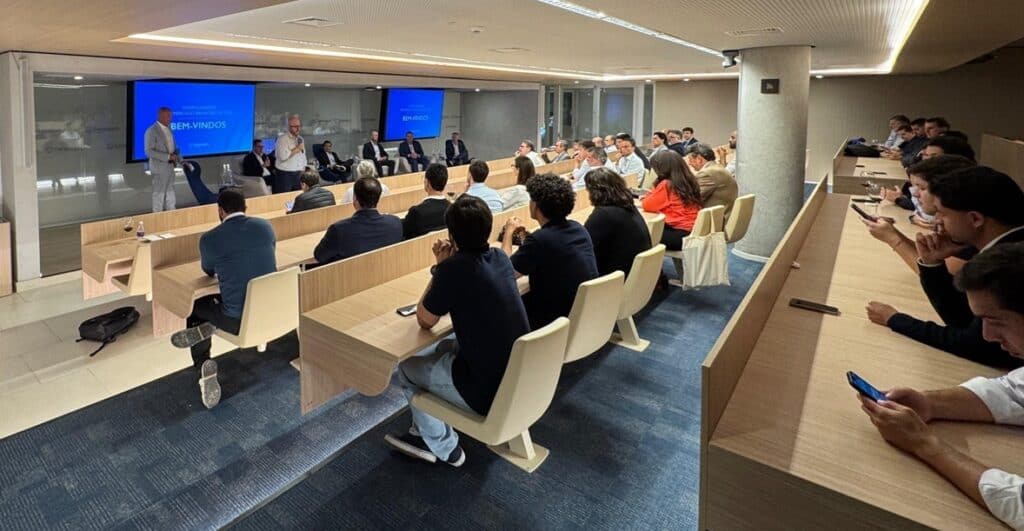
With all of that as context, I boarded a redeye flight last Monday evening, landed around 7 a.m. on Tuesday, and was meeting with XP Asset Management by 10:30 a.m. XP, Inc. is Brazil’s largest brokerage platform, while XP Asset Management is one of its largest ETF issuers – think of it as “Brazil’s Charles Schwab.” That was followed by meetings with BTG Pactual, the largest investment bank in Latin America (think “Brazil’s Goldman Sachs”), Itaú Asset Management, Brazil’s largest ETF issuer and private bank, and Galapagos Investment Management, an independent financial services firm serving tens of thousands of clients, including high-net-worth families and institutions. Galapagos also hosted a client reception where the U.S. contingent fielded questions on the history and current state of the U.S. ETF market.
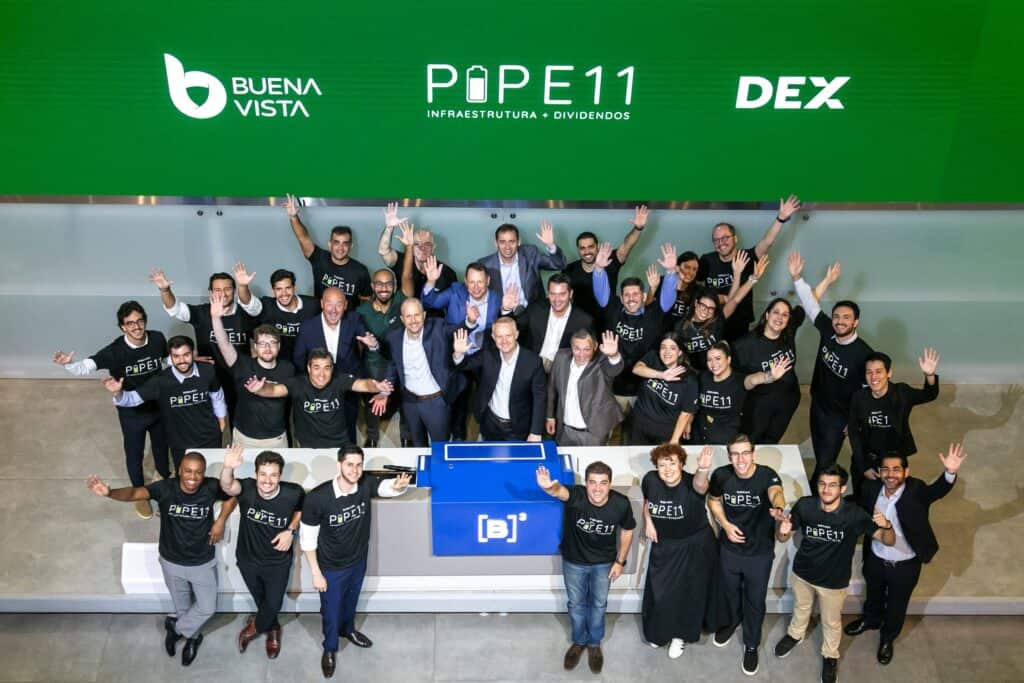
On Wednesday morning, I attended a bell-ringing ceremony at B3 (Brasil Bolsa Balcão), Brazil’s stock exchange. The Buena Vista Capital and DEX teams were celebrating the Buena Vista DEX VettaFi Neos Energy Infrastructure High Income ETF (ticker: PIPE11). The U.S. ETF delegation also had the chance to tour the exchange’s impressive on-site museum, which highlights Brazil’s rich financial history.

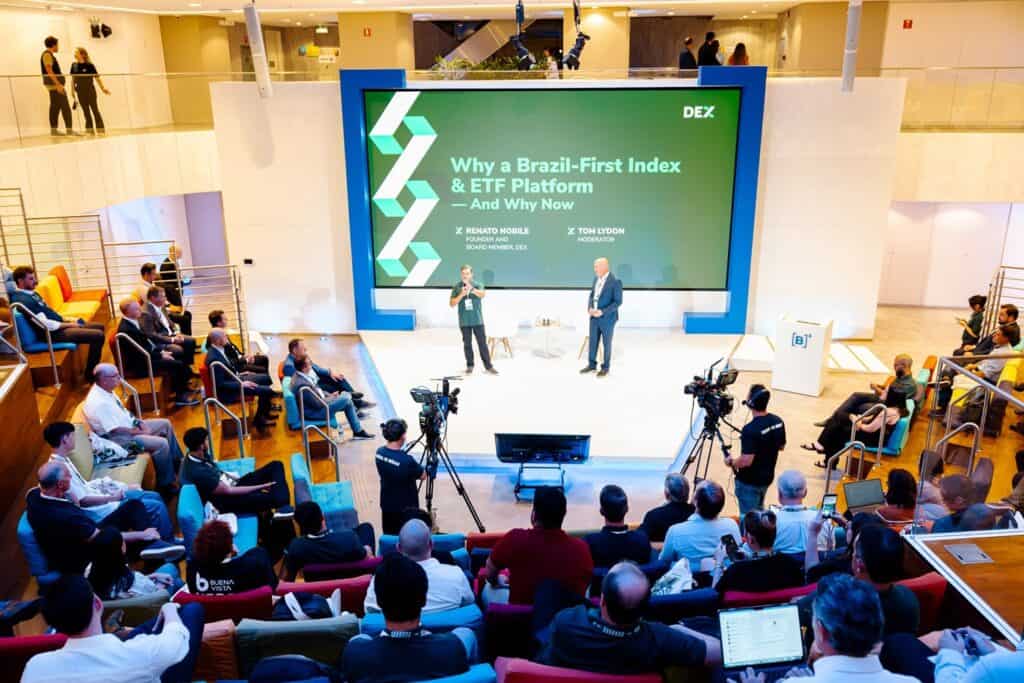
Wednesday afternoon featured the inaugural DEX ETF Summit at B3’s headquarters, with lively discussions on the evolution of the U.S. ETF market and key lessons that could accelerate ETF growth in Brazil. I sat on a panel moderated by ETF Industry veteran/legend Tom Lydon, alongside Daniel Maeda, Legal Superintendent at B3, and Marco Velloso, Superintendent of Institutional Investors Supervision at CVM, Brazil’s securities regulator. You can think of Daniel as roughly equivalent to the NYSE’s General Counsel and Marco as similar to the Director of the SEC’s Division of Investment Management. My biggest takeaway was that B3 and Brazil’s regulators are highly supportive of ETF innovation, and they see investor education as a critical element in building a robust ETF ecosystem in the country.
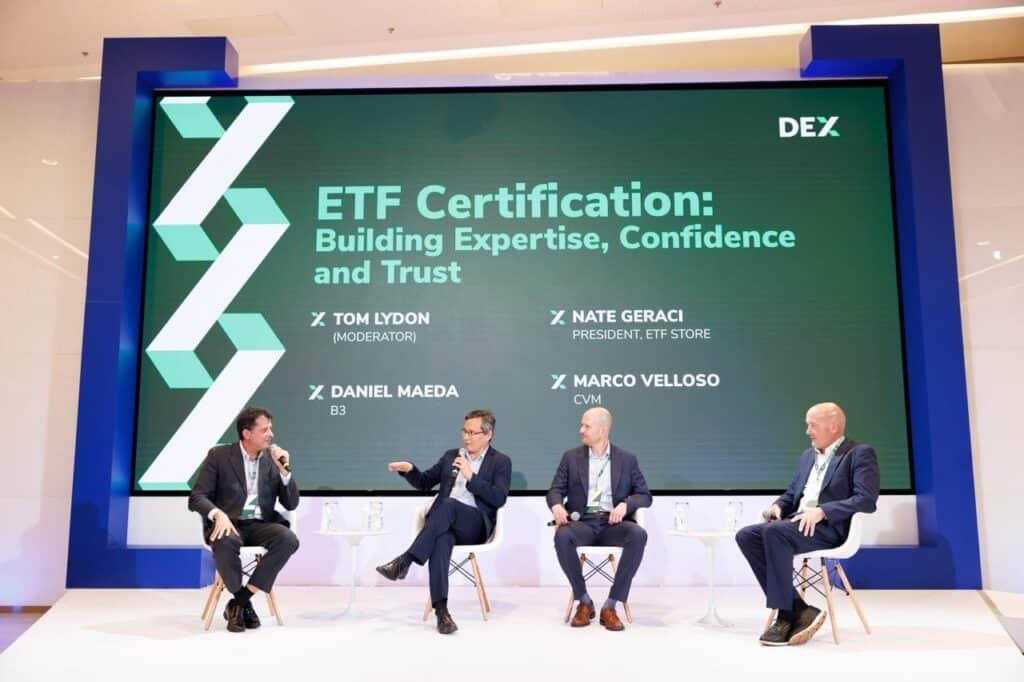
Education, education, education. I actually said this on the panel and was thrilled to hear Marco echo it. Education was absolutely critical to the adoption of ETFs in the U.S., and it’s clear that Brazil understands its importance as well. On that note, I’m extremely excited to announce that The ETF Institute will be partnering with DEX to bring the CETF certification program to Brazil. I’m proud of the work we’ve done educating U.S. advisors and ETF industry participants, and it’s incredibly rewarding to now extend that mission to Brazil.
Beyond the exchange and regulators, another clear takeaway was that banks and asset managers in Brazil are ready to embrace ETFs. Relying on U.S.-listed ETFs simply isn’t the optimal solution, and the country has all the ingredients in place to move its ETF market fully onshore. As Ricardo Schneider, Partner at DEX ETFs, explained:
“For many investors, buying US ETFs has been a workaround, not an optimal solution. Offshore investing introduces additional costs, tax complexity, currency timing risk, and operational friction. DEX exists to help Brazil move onshore with efficient, transparent, and locally aligned ETF solutions.”
It’s clear that this message is starting to resonate.
The first U.S. ETF launched in 1993, and over the past 33 years, the industry has grown to more than $14 trillion in assets. Brazil is wisely studying the good, the bad, and the ugly of that growth, looking to apply lessons learned to accelerate what took the U.S. decades to achieve.
It was striking to me that many of the executives and senior personnel we met with skewed younger. In the U.S., younger investors were early adopters of ETFs, and the optimism and energy of the people we met with suggests that ETF growth in Brazil could be even faster.
One of the key messages we tried to convey in Brazil was that, in addition to education, financial advisors and asset managers must think long-term. Advisors worry about losing commission-based revenue, and asset managers are concerned about margin pressure from lower-cost ETFs. These concerns are real, but they are short-term in nature. A critical ingredient in the success of the U.S. ETF market was the willingness of advisors and asset managers to look beyond short-term financial considerations and focus on the investor’s best interests. When the client’s best interests are always the priority, everyone benefits financially. Revenue should come from delivering high-value service, not from product sales. With that mindset, I believe ETF growth is inevitable in Brazil, just as it was in the U.S.
Following the DEX Summit, I boarded another redeye flight back to the U.S. at 10 p.m. on Thursday evening. It was a whirlwind 48 hours that I’ll never forget.
I want to extend a special thanks to Ricardo Schneider, Partner at DEX ETFs, who handled so many behind-the-scenes details to ensure my trip went seamlessly. I also want to thank Renato Nobile, Founder of DEX ETFs and Buena Vista Capital – a dynamic entrepreneur with an inspiring vision for the future of Brazil’s ETF market. Finally, a huge thank-you to Tom Lydon, an ETF legend in the U.S. Tom is the ultimate professional, with a rare gift for connecting the right people and making ideas and conversations flow in any room.
Viva o Brasil!
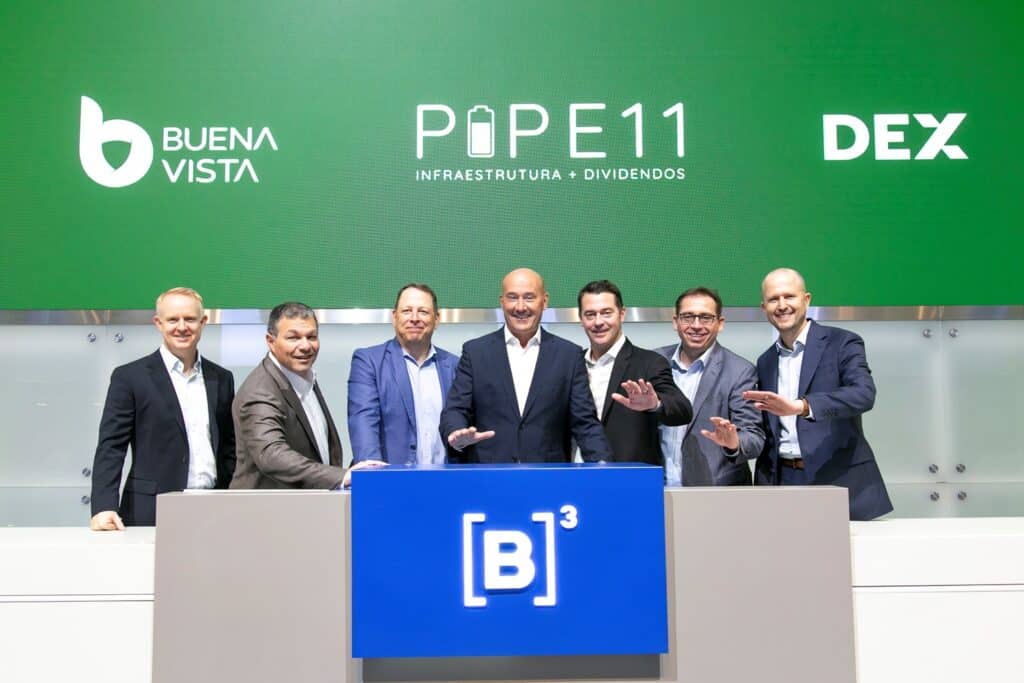
(U.S. ETF Industry Delegation; Pictured left to right: Wes Mathews – Head of Investment Strategy at NEOS Investments, Brian Coco – Chief Product Officer at VettaFi, Steve Sachs – Former Managing Director at Goldman Sachs, Tom Lydon – Strategic Investor, Peter Dietrich – Global Head of Index Sales at VettaFi, Mike Akins – Founding Partner at ETF Action, and Yours Truly)